
Ice Dams on Manitoba Roofs: Why They Form and What Actually Stops Them
An ice dam is a heat problem wearing a winter costume. Warm air escaping into your attic melts the snow on the upper roof; that meltwater runs down to the cold eave and refreezes, and the ridge of ice it builds forces the next round of water back up under the shingles. Chipping the ice off treats the symptom. Sealing the air leaks, insulating properly, and venting the attic is what stops it from coming back.
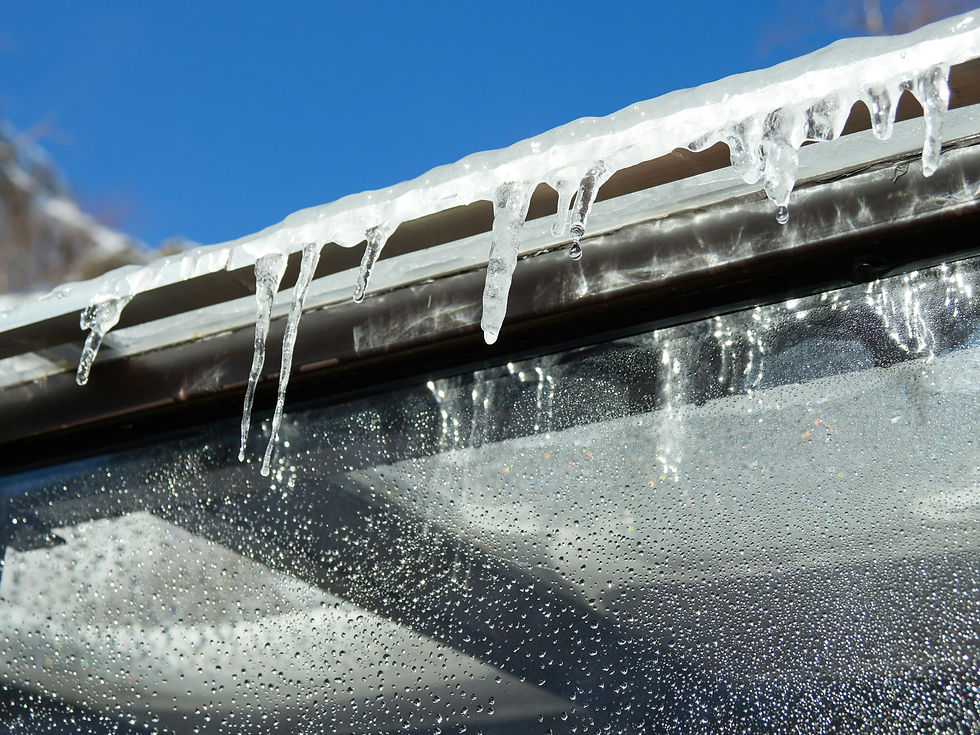
Every Manitoba winter produces the same photos. Icicles hanging off the eaves, a ridge of ice sitting on the gutter line, and a water stain spreading across a bedroom ceiling.
The icicles look like a weather problem. They are not. Houses in the same neighbourhood, under the same snow and the same temperatures, get wildly different results, and the difference is almost always what is happening in the attic.
Here is what is actually going on, and what fixes it for good.
At a Glance
Ice dams form when the upper roof is warmer than the eave, which is a heat loss issue
Heat escapes through air leaks first, not through insulation, so sealing comes before adding insulation
Attic ventilation keeps the roof deck cold and even, which prevents the melt and refreeze cycle
Water backing up under shingles is what causes the interior damage, not the ice itself
Chipping, salting, and heat cables manage symptoms and do not solve the cause
Ice damming that repeats every year is a sign the roof assembly needs attention
The fix is usually attic work, not roof work
What Actually Causes an Ice Dam?
Three things have to line up: snow on the roof, a roof surface above freezing somewhere up high, and a roof surface below freezing down at the eave.
Snow on a roof is insulation. It traps whatever heat is coming up from below. If the attic is warm, the underside of the roof deck warms up, and the snow sitting against that deck melts from underneath.
That meltwater runs down the slope. When it reaches the eave, which overhangs the exterior wall and has no warm space beneath it, it hits a surface that is at outdoor temperature. It refreezes there.
Do that for a few days, and you have a ridge of ice along the eave. Now the water coming down behind it has nowhere to go, so it pools. Shingles shed water running downhill. They do not seal against standing water. The pool finds its way under the shingle course and into the roof deck, and from there into the insulation, the ceiling, and the wall.
The interior damage is the meltwater, not the ice.
Why Is My Attic Warm in the First Place?
Two mechanisms, and they matter in a specific order.
The first is air leakage. Warm indoor air moves upward and escapes into the attic through every gap in the ceiling plane: pot light housings, bathroom fan penetrations, plumbing stacks, the attic hatch, wiring penetrations, gaps at the top of interior walls, and chimney chases. This is the biggest heat source in most attics, and it is the one people overlook.
The second is conduction through insulation. If insulation is thin, compressed, poorly distributed, or missing at the edges where the roof meets the wall, heat moves through it into the attic.
The reason order matters is that adding more insulation on top of unsealed leaks does very little. The air is still moving. Sealing the ceiling plane first, then insulating to a proper and even depth, is what actually drops the attic temperature.
How Does Ventilation Fit In?
A cold roof is a roof that stays at outdoor temperature across its whole surface. Ventilation is how you get there.
Intake at the soffit and exhaust at or near the ridge let outdoor air wash the underside of the roof deck, carrying away whatever heat does get into the attic and keeping the deck temperature even from ridge to eave. Even temperature means no melt line, which means no dam.
Ventilation problems we see regularly:
Soffit vents blocked by insulation that was blown in over them
Exhaust venting present but intake missing, so there is nothing to draw
Bathroom and kitchen exhaust fans discharging into the attic instead of outside
Additions or dormers built without carrying the ventilation path through
Insulation baffles missing at the eave so the air path is pinched shut
None of those are exotic. All of them produce the same result.
Do Heat Cables and Roof Rakes Work?
They manage the symptom. That is worth something in an emergency, and it is not a solution.
Heat cables melt a channel through the ice so water has a path out. They do not stop the ice from forming; they draw power all winter, and if they are not laid out to carry water all the way past the eave, they just move the dam.
Roof raking removes the snow that feeds the melt, which does reduce dam formation. It is also repeated manual work every snowfall; it is a fall hazard, and it is easy to damage shingles doing it.
Chipping at ice with anything hard is the worst option. It damages shingles, flashing, and gutters, and the damage does not show up until spring.
If you have active water coming into the house right now, symptom management is the right call to stop the immediate damage. Then fix the cause before next winter. Our post on what to do after storm damage in Manitoba covers how to handle the immediate stage of any water entry.
Is Ice Damming a Roofing Problem or an Insulation Problem?
Usually insulation and air sealing, sometimes both.
The roof is where the damage shows up, which is why people call a roofer. But if the roof assembly is sound and the attic is leaking heat, a new roof does not stop ice damming. You get a new roof with the same dam on it.
Where roofing does come into it:
Ice and water membrane at the eaves is a protective layer that buys you a lot when a dam forms, and it is standard on properly done roofs in this climate
Damaged or lifted shingles from previous dams need replacing
Flashing at valleys, walls, and penetrations is a common secondary leak point during a dam event
If the roof is old and being replaced anyway, that is the moment to fix ventilation, because the deck is open
The right sequence is to assess the attic and the roof together, then decide. A roofing crew that will only quote shingles and never looks at the attic is going to sell you shingles.
Real Scenarios
You get big icicles every winter but no interior damage yet. You have a dam forming, and you have been lucky. The membrane under your shingles, if there is one, is doing its job. This is the year to get the attic assessed rather than the year after the ceiling stains.
You have stains on a bedroom ceiling near an outside wall in February. That is dam water getting in. Deal with the immediate water, then get the attic sealed and insulated before next winter. Repainting the ceiling without fixing the cause means repainting it every year.
Your ice damming started after a renovation. Very common. Pot lights, a new bathroom fan, a raised ceiling, or a dormer can all open the ceiling plane or interrupt the ventilation path. The renovation did not cause a roof problem; it changed the heat flow.
Your roof is at the end of its life, and you also have ice damming. This is the good news scenario, because the two fixes go together. Doing ventilation, membrane, and shingles in one project is far cheaper than doing them separately.
FAQ
Does more attic insulation fix ice dams on its own?
Rarely on its own. Air leakage is usually the bigger heat source. Insulating over unsealed leaks improves things slightly and leaves the main problem in place.
Is ice damming covered by home insurance?
Coverage varies by policy and by insurer, and it typically distinguishes between sudden water damage and long-term or maintenance-related issues. Check your specific policy and speak to your insurer rather than assuming either way.
Can gutters cause ice dams?
Gutters do not cause them. They do give the ice something to build on, and they can be damaged or torn off by the weight. Removing gutters does not prevent dams.
How do I know if my attic ventilation is adequate?
The reliable answer comes from someone getting into the attic and looking: whether soffit vents are clear, whether baffles are in place, whether exhaust venting exists, and whether fans are ducted outside. Guessing from the ground is not reliable.
Will a metal roof stop ice dams?
Metal sheds snow more readily and is less prone to water intrusion at laps, which helps. It does not address heat loss, and dams can still form at the eave on a warm roof. It also introduces a snow-shedding safety consideration below the eave.
Should I fix this in winter or wait for spring?
Stop active water entry now. Air sealing and insulation work is interior attic work and can generally be done through the winter. Roofing changes usually wait for workable conditions.
Ready to Get to the Bottom of It?
Flip Flop Construction handles roofing, insulation, and the interior work behind it across Winnipeg, Steinbach, Kleefeld, Grand Beach, and surrounding Manitoba communities, along with Red Lake, Kenora, Dryden, and remote fly-in communities in Northern Ontario. Because the same crew handles the attic and the roof, the assessment covers the whole assembly rather than just the part that is visible from the driveway.
See our roofing work, browse the portfolio, and get in touch if you want it looked at properly.
431-777-5219
flopconstruction@gmail.com
flipflopconstructioninc.com
One crew, every trade, no excuses.
Comments